
February 2026
Lenten ecological conversion - Church of the Poor or Epstein-Bannon church? - Digital revolution - Baby Eliana Kira - Prevost reconciled lay movements - Maryknoll use see-judge-act - Black history

Friends
We begin this issue with a Lenten call to ecological conversion from the US bishops.
We share with you an appeal for Lenten solidarity for Eliana Kira, the tiny daughter of Philippines YCW worker Jho Letada and her husband Marwin, who urgently needs a hole in the heart operation.
Continuing in the Lenten spirit, Richard Pütz invites us to reflect on the digital revolution in the light of Catholic Social Teaching while Paul Lentern reflects on the temptation of Jesus in the wilderness.
In a recent video, Fr Ty Hullinger reminds us that Christmas foreshadows Easter. Renée Roden from the US Catholic Worker, contrasts the Church of the Poor envisaged by Helder Camara and the signatories of the Pact of the Catacombs with the one envisaged by Jeffrey Epstein and Steve Bannon.
We note how, as a bishop in Peru, Robert Prevost now Pope Leo worked to reconcile and integrate the lay (Cardijn-inspired) movements into the work of his diocese. We see how the Maryknoll Institute continues to use the classical see-judge-act method.
And we share a new website featuring Joseph Cardijn’s own autobiographical notes.
The Cardijn Associates Team
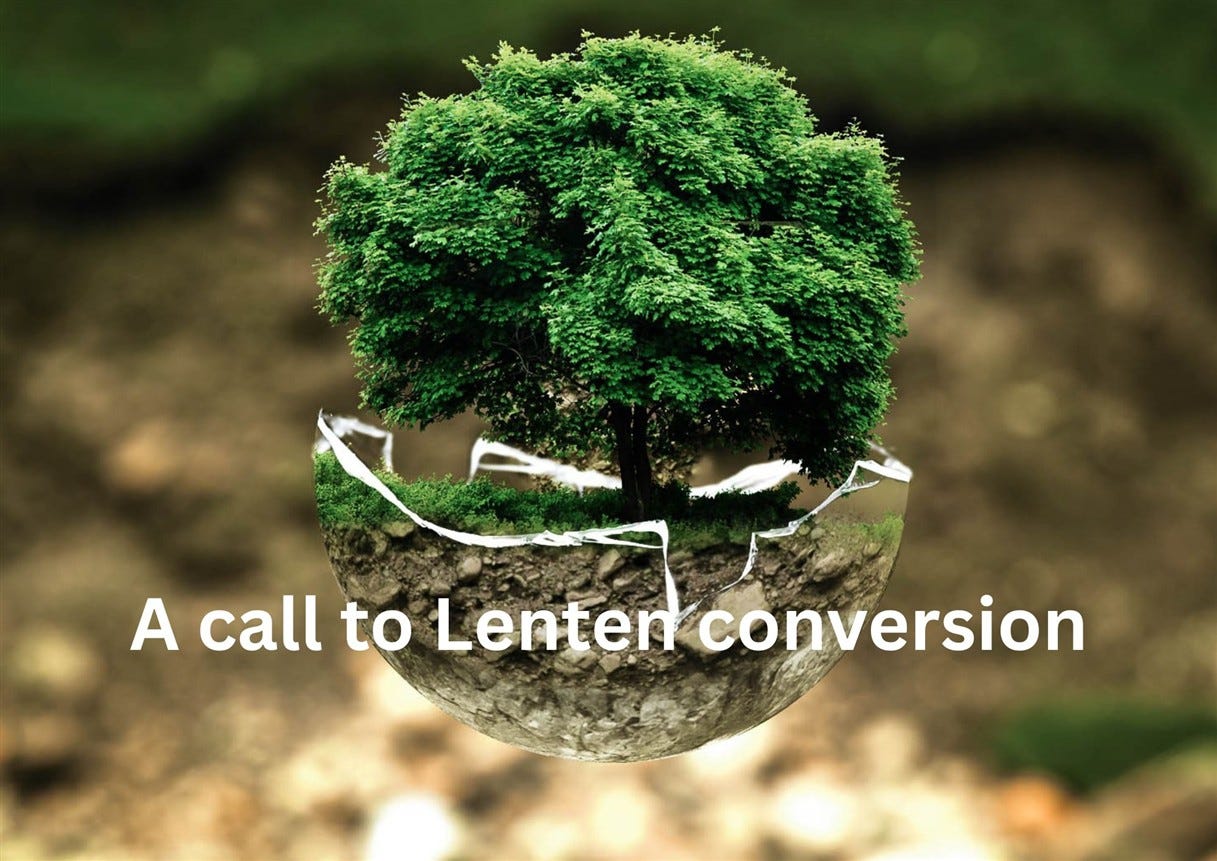
Lent: A call to ecological conversion

We enter this season of Lent recognizing the yearnings of our hearts which can be fulfilled only in Christ. The Desert Fathers and Mothers understood that in order to hear Christ’s voice, we must enter into the solitude of the desert. For the one who listens, the desert is not a barren place that is dead and desolate. Rather, it is a place that teems with life, and whose pregnant solitude reveals the Lord, present to us in all of creation.
This time of Lent reminds us that we are in need of conversion—for as Pope Francis wrote in Laudato si’:
“‘The external deserts in the world are growing, because the internal deserts have become so vast.’ For this reason, the ecological crisis is also a summons to profound interior conversion” (no. 217).
The conversion that we need is both metaphorical and physical.
READ MORE
An Invitation to Ecological Conversion for U.S. Catholics (USCCB)
PHOTO
Lisa / Pexels
Let’s open our hearts for Eliana Kira

Here is a really tough situation that we’ve learnt about recently, namely the medical problems facing Eliana Kira, the tiny daughter of Jho Letada, a former full time worker and national president of the Philippines YCW, and her husband, Marwin.
In short, Eliana has a hole in the heart and needs an urgent operation as the hole is already enlarging. Aged eleven months, she weighs only 4.8kg, which places her below the 3% mark for babies her age, another major concern.
The cost for surgery comes to near $US18,000, which is completely beyond the family’s means. As Lent begins, we are asking for your support for Eliana and her family. Please give generously.
FULL STORY
Lenten campaign: Baby Eliana Kira
USD DONATION DIRECT LINK
https://events.humanitix.com/baby-eliana-kira-usd
Church of the Poor or an Epstein-Bannon church?
In the deluge that is the Epstein files, journalists have found threads of the divine, writes Renée Roden. Reporters like Claire Giangravé at Religion News Service have found mentions of the Vatican and the church, including indications the convicted sex offender Jeffrey Epstein was in conversations with Steve Bannon, discussing ways to undermine Pope Francis. Epstein seemed fascinated by religious power, particularly the pope.
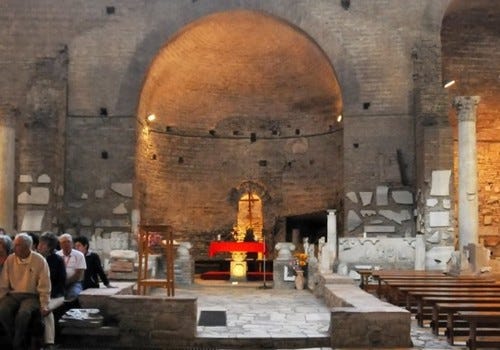
So, imagine this scene. On the surface, it seems like a scene Epstein would understand: in an underground room, 60 years ago, a group of bishops gathered on a November night on the outskirts of Rome.
But what the bishops were signing on Nov. 16, 1965 — now this would be news to Epstein — was the Pact of the Catacombs. Together, they vowed to be a “poor servant church.”
READ MORE
The church of the poor vs. the church according to Jeffrey Epstein (NCR Online)
Black History Month: Let us be faithful stewards of memory
“This February marks one hundred years of commemorating Black history in the United States,” the USCCB Subcommittee for the Promotion of Racial Justice and Reconciliation reminds us.
“During this year’s observance of Black History Month, we encourage the faithful to consider the lessons of history, honoring our heroes of the past and learning from the mistakes of the past. Although we may at times encounter people or situations in our country that seek to erase ‘memory’ from our minds and books, it can never be erased from our hearts.
“May our reflections strengthen our faith and communities. Let us be faithful stewards of memory. Let us be courageous witnesses to truth. Let us pray and work to honor the inherent dignity of every person and the sacred stories of every people.”
READ MORE
Let Us Be Faithful Stewards of Memory (USCCB)
As bishop in Peru, Pope Leo reconciled lay movements with the diocese
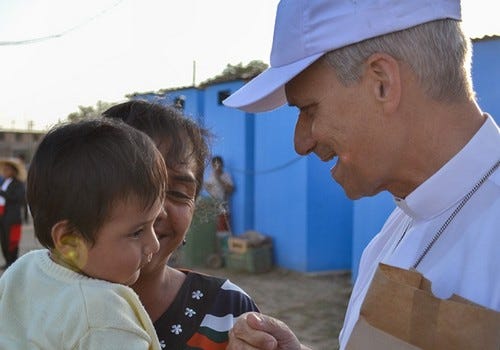
As bishop of Chiclayo in Peru, Robert Prevost, the future Pope Leo XIII, reconciled the diocese with lay movements, which had become estranged under previous bishops.
Several lay-led organizations had emerged outside formal church structures, carrying out education, youth formation, family support and nutrition programs in poor neighborhoods across the region, while remaining outside of the diocese and parish structures.
However, in his first year as bishop, Prevost accepted an invitation to meet with lay movements active in Chiclayo. Following that initial contact, the Chiclayo Diocese recognized several lay-led organizations under Prevost’s direction, signing agreements to facilitate their collaboration.
READ MORE
Leo reconciled lay movements & his Peruvian diocese
Maryknoll helps students to see, judge and act
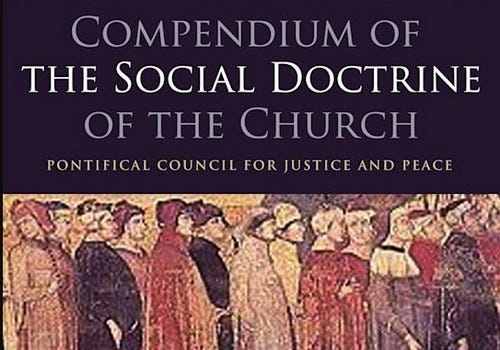
Students at three schools in the Archdiocese of Chicago are learning the connection between the faith they learn in class and the good they can do in the world.
The schools are working with the Maryknoll Discipleship Institute, which started in the Archdiocese of Seattle.
In Seattle, the institute forms the religion curriculum for middle school students, first teaching them the “see, judge, act” method embedded in Catholic social teaching, said Maryknoll’s Jackie Hopper.
Maryknoll curriculum helps students learn Catholic social teaching (Maryknoll)
Whole of life formation needed: Cardinal Farrell
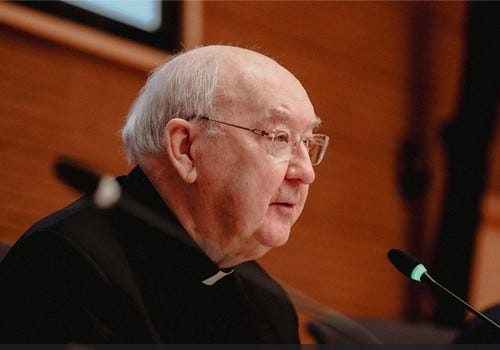
Opening the third plenary assembly of the Dicastery for Laity, Family and Life, Cardinal Kevin Farrell emphasized the need for “basic formation” in the Christian life among lay people. The assembly took place at the Jesuit General Curia in Rome from 4-6 February 2026.
Noting what he characterized as “the alarming increase in the number of people who do not know Jesus Christ at all,” Cardinal Farrell called for a “formation of the heart”, which involves the whole life: at the origin of Christian life there is an encounter with the person of Jesus Christ, who first changes the heart, then our mindset, and eventually transforms daily conduct and all of life.
READ MORE
Whole of life formation needed: Cardinal Farrell (Vatican News)
Cardijn’s life: In his own words
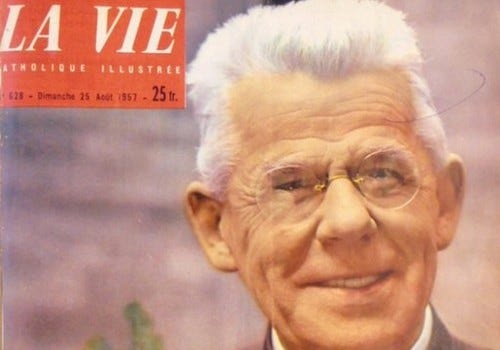
Strictly speaking, YCW founder Joseph Cardijn never wrote an autobiography. At least not in the form of a complete book. Nevertheless, he often told the story of his life in various talks and speeches around the world.
Towards the end of his life, he also wrote a series of notes and gave several interviews describing various incidents in his life and the development of his work, which are compiled in this new website.
VISIT THE WEBSITE
Joseph Cardijn – My life (Joseph Cardijn Digital Library)
Lenten Theme: Catholic Social Wisdom – Foundations in a Digital Age

This Lent, as adults, let us reflect and meaningfully engage with artificial intelligence and emerging technologies through the lens of Catholic social teaching, encyclicals, and contemporary Catholic thought, writes Richard Pütz
Using the See-Judge-Act method, together we will connect our lived experiences with Church wisdom, guided by key thinkers: Thomas Merton (technology and spirituality), Marshall McLuhan (media environments), Mortimer Adler (shared inquiry), Omar Arias Zurita (AI literacy), and Matthew J. Gaudet (AI and encounter).
READ MORE
Lenten Theme: Catholic Social Wisdom – Foundations in a Digital Age (Cardijn Reflections)
Gospel: Jesus tempted in the wildnerness

With the commemoration of Ash Wednesday a few days ago, the liturgy now moves to the first of the Sundays of Lent, leading to Holy Week and the Easter Triduum, writes Paul Lentern. The Gospel for the first Sunday of Lent (22 February) shares the account of Jesus’ temptation in the wilderness.
The fast of forty days and forty nights is an echo of the forty years that the people of Israel wandered in the wilderness after the Exodus from slavery in Egypt, prior to entering the promised land. An echo highlighting the author’s theme of Jesus as the new Moses.
The forty days of the text is also a foreshadowing, for Christians, of the six weeks of Lent where fasting, abstinence and almsgiving are central themes.
READ MORE
Jesus tempted in the wilderness (Cardijn Reflections)
Social Media
Cardijn Associates USA
Contact
Email: cardijnassociates@gmail.com